
Why Shared Creativity Helps Families Reconnect
Discover five powerful conversation starters to enhance family bonds. Foster deeper connections and enrich your family communication with these engaging tips.

Contents
Why do creative activities help families reconnect?
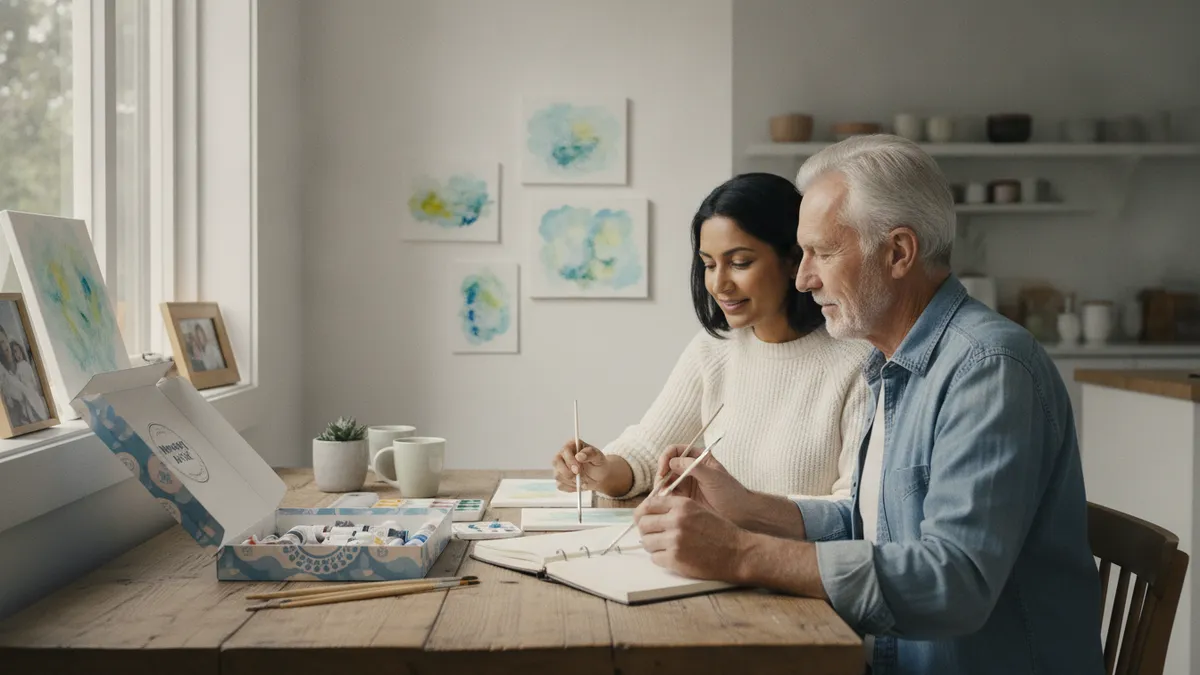
Shared creative activities give families something to focus on together side by side, which naturally reduces pressure and helps conversation flow more easily. Painting, drawing, and guided creative projects can create calm, meaningful moments that feel more natural than sitting face to face trying to force conversation.
Most people don’t realise how much pressure sits inside ordinary visits with ageing parents.
You arrive already thinking about:
- medications,
- appointments,
- groceries,
- mobility,
- paperwork,
- whether they seem “okay.”
And before long, the relationship quietly shifts from:
parent and child
to:
caregiver and patient.
Not intentionally. Just gradually.
That’s one of the reasons Deb created Artful Connections.
Not to give families another activity.
But to help create moments where people could simply be together again.
Why is side-by-side activity easier than face-to-face conversation?
Many people find it easier to talk while doing something with their hands.
Painting, cooking, gardening, walking, and creative activities all create what therapists sometimes call “soft focus” conversation, where eye contact isn’t constant and silence doesn’t feel uncomfortable.
Deb noticed this repeatedly while running workshops in Brisbane aged care settings.
Some of the most meaningful conversations happened when nobody was trying to “have a meaningful conversation” at all.
People painted.
Stories surfaced.
Memories appeared naturally.
The activity carried the interaction.
Why do ageing parents sometimes seem harder to connect with?
As parents age, conversation can quietly become more functional.
Adult children often ask:
- “Have you taken your medication?”
- “How’s the knee?”
- “Did the doctor call?”
- “What do you need from the shops?”
Those conversations matter.
But if every interaction becomes task-based, emotional connection can slowly shrink underneath the logistics of care.
Shared creative activities interrupt that pattern.
They create space for:
- storytelling,
- humour,
- reflection,
- memory,
- and simple companionship.
Why does creativity help people open up emotionally?
Creative activity engages different parts of the brain than ordinary conversation.
The combination of:
- colour,
- movement,
- sensory engagement,
- rhythm,
- and relaxed focus
can help people feel calmer and less guarded.
Deb has seen people who described themselves as “not creative at all” become deeply engaged once the pressure of “doing it right” disappeared.
That’s why Artful Connections kits are structured the way they are:
- guided templates,
- gentle video instruction,
- forgiving materials,
- and conversation prompts that emerge naturally during the process.
The goal isn’t artistic perfection. It’s emotional safety.
Why does creating something together matter?
One of the most powerful things about shared creativity is that something tangible remains afterwards.
A painting on the fridge.
A memory book.
A conversation recalled later.
A story written down.
These things become emotional anchors.
For some families, the artwork matters less than the memory attached to making it together.
Deb often says:
The real outcome isn’t the painting. It’s the connection that happens while creating it.
What makes Artful Connections different from a normal craft kit?
Most craft kits are designed for individual activity.
Artful Connections was designed specifically for connection between people.
Everything in the box is intentionally structured to reduce hesitation and encourage shared experience:
- no blank page,
- no shopping for materials,
- no complicated instructions,
- no pressure to be artistic.
Just a gentle reason to sit down together.
Frequently Asked Questions
Do you need to be artistic to enjoy creative activities together?
No. Artful Connections kits are specifically designed for people with no art experience. Guided templates and step-by-step video support remove the pressure of “getting it right.”
Why are creative activities helpful for seniors?
Creative activities can support emotional wellbeing, sensory engagement, memory recall, self-expression, and social connection in a calm and accessible way.
Can creative activities help someone with dementia?
Yes. Familiar themes, sensory engagement, and low-pressure creative activities can often help spark recognition, storytelling, and emotional connection, even when traditional conversation feels difficult.
What makes side-by-side activities different?
Side-by-side activities reduce conversational pressure. Many people find it easier to connect naturally when attention is shared between an activity and the conversation itself.
Written by Debra Shapiro Qualified Art Therapist, BFA (Hons), Founder of Artful Connections