
What to Do When a Low-Energy Activity Hurts Parent

Contents
When the activity starts to hurt, the visit has already changed
The first sign is usually small. Your mum shifts in the chair after 12 minutes. Your dad rubs his shoulder while still trying to smile. Someone says, “I’m fine, keep going,” and you can hear the effort in it.
That is the moment to stop treating the activity like the point of the visit.
What should you do when a low-energy activity becomes physically uncomfortable for your parent halfway through, but stopping it seems to derail the whole visit? You make a quick call based on comfort, not on finishing. The visit is still salvageable. The activity just needs to change shape.
I’ve seen this most often with painting, puzzles, photo sorting, and even a short drive to a café in Brisbane where the chair is wrong, the light is harsh, or the outing has gone on 20 minutes too long. The problem is rarely the activity itself. It’s the mismatch between the plan and what your parent’s body can actually manage that day.
First, work out whether it’s pain, fatigue, or pride
You do not need a perfect diagnosis in the moment. You need a fast read on whether continuing is likely to help or make things worse.
Look for three practical signals:
- Pain usually has a clear behaviour attached to it, guarding a joint, wincing when they move, going quiet, or repeatedly adjusting the same arm, hip, or neck.
- Fatigue looks more like drifting attention, slower responses, slumping posture, or a sudden need to rest without any one movement causing the reaction.
- Embarrassment or stubbornness often sounds like “No, no, I’m alright” while the body says otherwise, especially if they are trying not to be the one who “ruins” the visit.
If the discomfort shows up the same way twice in 10 minutes, treat it as real. Don’t wait for them to prove it by pushing through. Elderly parent activity pain is often understated because older people have spent a lifetime not making a fuss.
Key takeaway: If you are unsure, assume the body is giving you a limit before the words do.
The quickest test is one small change
Before you stop completely, change one variable and watch what happens for 2 to 3 minutes.
Try this:
- Ask them to change chair position.
- Offer water.
- Reduce the reach, grip, or time needed.
- Switch from standing to sitting, or from sitting upright to a supported seat.
- See whether the face softens, the breathing settles, or the rubbing stops.
If comfort returns quickly, you may be able to keep going in a modified way. If the discomfort stays the same after the adjustment, stop. That is your answer.
This is the bit carers often miss. They keep adding encouragement when what’s needed is a smaller task. A low-energy activity becomes uncomfortable halfway through because the body has run out of tolerance, not because the person has lost interest.
What to say in the moment without making it heavy
The wording matters. If you say, “We need to stop because you’re struggling,” most parents will hear defeat, even if you mean care.
Use language that protects dignity and keeps the visit moving:
- “Let’s pause here and make this easier.”
- “We can come back to this later, or leave it as it is.”
- “That’s enough for now, let’s have a cuppa.”
- “We’ve already done the good part.”
- “Let’s change gears.”
If they are sensitive about being treated as fragile, avoid fussing. Don’t over-explain. Don’t apologise three times. Say it once, calmly, and move straight to the next thing.
That approach matters in family caregiver support because people usually remember the emotional tone more than the exact words. If you stay matter-of-fact, they are more likely to stay with you.
How to pivot without making it obvious the plan failed
The best pivot is one that feels like a natural next step, not a rescue.
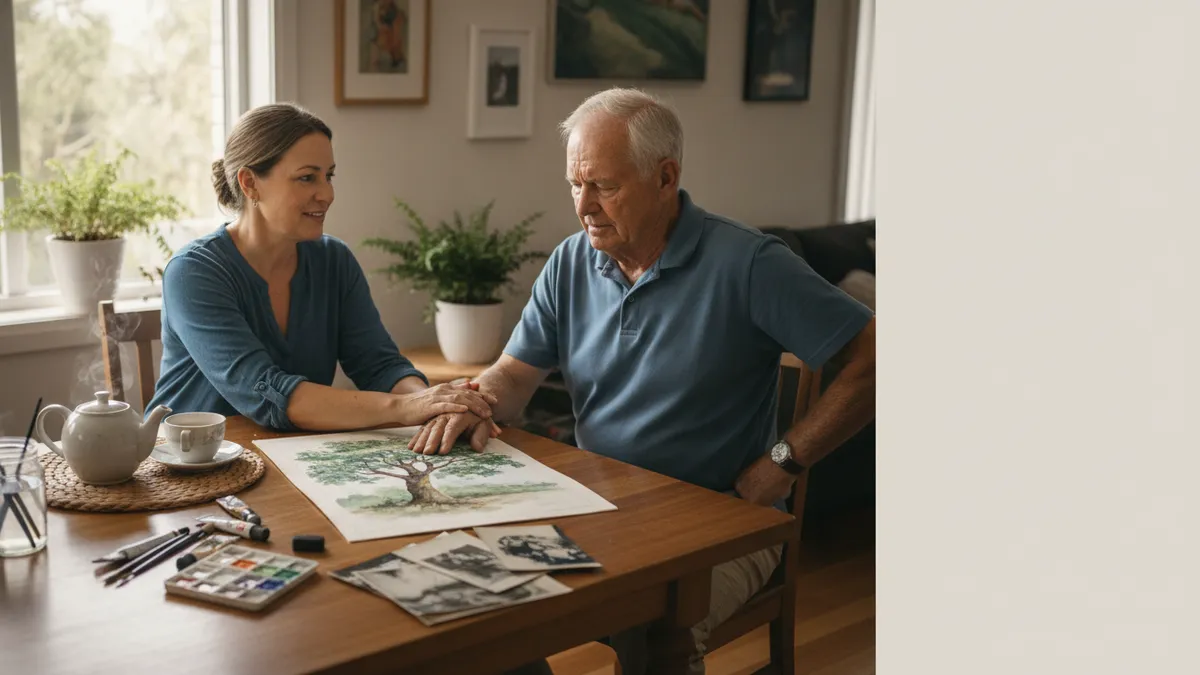
If the original activity was painting, for example, you do not need to finish the whole canvas. You can move from painting to choosing a title, naming the colours used, or talking about where the image reminds them of. If you were sorting old photos, stop the sorting and ask them to choose the one they’d save if there was only room for three. If you were out at South Bank or the Brisbane Botanic Gardens, call the walk done and sit for a drink before anyone gets overtired.
The trick is to shift from doing to noticing.
That works because it preserves the feeling of being together. It also avoids the awkwardness of saying an activity “failed”, which is often the part older parents hate most. They may not mind stopping. They mind being made to feel like they couldn’t manage what everyone else expected.
The best backup plan is already in the room
If you only have one visit window, do not rely on a second activity that needs shopping, setup, batteries, or goodwill from the weather.
Have a backup that is:
- already at hand,
- seated,
- low effort,
- and easy to stop at any point.
For some families, that means a guided painting kit, because everything is in one box and there’s no blank page to stare at while everyone waits for inspiration. A kit like Painting Kits for Adult Children and Their Parents works well for this exact situation because the templates are already there, the paints and brushes are included, and Deb’s step-by-step video guidance means you are not carrying the whole experience in your head.
That matters more than it sounds. When a parent becomes uncomfortable halfway through, the worst possible backup is another activity that needs more energy from you.
If painting is the original plan, the backup can be even smaller:
- finish one section only,
- pick colours together,
- or turn the rest into a conversation about the memory behind the image.
That way the visit still has shape, even if the original pace changed.
When to keep going, and when to stop completely
Use this simple rule.
Keep going in a modified way if:
- the discomfort eases within a couple of minutes,
- they can describe it as mild rather than sharp,
- the movement causing it can be reduced,
- and they still seem engaged once the task is made easier.
Stop completely if:
- the pain is sharp, sudden, or worsening,
- they are guarding a joint or grimacing repeatedly,
- the discomfort returns as soon as they resume,
- or they start getting irritable in a way that feels like pain, not mood.
If you are asking yourself, what should you do when a low-energy activity becomes physically uncomfortable for your parent halfway through, but stopping it seems to derail the whole visit?, the honest answer is this, do not gamble. A few extra minutes is not worth turning a manageable ache into a bad afternoon.
The mistake I see most often is trying to “salvage” the original plan for the sake of the mood. That usually backfires. The mood improves faster when the body is comfortable.
A better one-visit fallback for older adults who tire quickly
If your parent is likely to fatigue, choose something with no blank page and no memory test built in.
That is why guided creative activities can work so well for older adults, including people with mild cognitive change. A self-paced setup lets them pause, rewind, or simply stop after one section without feeling like they have failed the task. For families in Brisbane juggling work, school pickup, and a short visit across town, that kind of flexibility is not a nice-to-have. It’s the difference between a calm hour and a strained one.
If your parent has mild dementia or gets overwhelmed by open-ended tasks, the Painting Kits for People Living with Mild Dementia are designed to remove the blank-page pressure. That matters because many activities quietly test recall, sequencing, or fine motor control. This one doesn’t need to.
A simple visit plan that reduces the chance of mid-activity pain
You can prevent a lot of discomfort by planning the visit around the body, not the calendar.
Try this structure:
| Part of the visit | Keep it to |
|---|---|
| Settling in and tea or water | 10 minutes |
| Main activity | 15 to 25 minutes |
| Pause and check-in | 2 minutes |
| Optional second round | 10 minutes max |
| Finish with a familiar ritual | 5 to 10 minutes |
That 15 to 25 minute window is often the sweet spot for low-energy activities. After that, hands get tired, backs stiffen, and concentration drops. If you know your parent usually fades after 20 minutes, plan for 15. It feels small on paper, but it often gives you a better visit.
What not to do
A few habits make this harder than it needs to be.
- Don’t keep asking, “Are you sure?” every 30 seconds.
- Don’t turn the discomfort into a family discussion in front of them.
- Don’t insist on finishing because “we’re almost done”.
- Don’t treat the backup plan like a consolation prize.
- Don’t apologise for changing course. Just change course.
That last one matters. If you act embarrassed, your parent will usually feel they should be embarrassed too.
The part that actually preserves the visit
The visit is not preserved by finishing the activity. It is preserved by protecting the feeling between you.
A parent who gets sore halfway through a painting session, a photo album, or a short outing does not need a perfect workaround. They need to feel that you noticed, adjusted, and stayed with them. That is the real skill in caregiver visit planning.
So if you are sitting there wondering, what should you do when a low-energy activity becomes physically uncomfortable for your parent halfway through, but stopping it seems to derail the whole visit?, make the smallest possible change that protects comfort and dignity. If that works, keep going gently. If it doesn’t, stop without drama and move to something seated, simple, and familiar.
A guided kit can make that easier next time because the structure is already there. If you want the faster path, start with Painting Kits for Adult Children and Their Parents, and have everything ready in one box before the next visit.